Showing posts with label IPL. Show all posts

Monday, May 27, 2013

IPL 6 shame gate – Do we need a cricket governance model with a bite?


The sixth edition of the Indian Premier League (IPL) has fizzled out as fast as Pepsi’s new drink Atom (apparently it tastes like a mix of Chyavanprash and Jal Jeera with a shot of cola), thanks to the spot fixing scandal that has engulfed many IPL franchisees. This is the second time the league has been caught in such activity, the first being in 2010 that led to the ouster of Lalit Modi, then chairperson of the league. But we don’t seem to learn from the past, do we? As a nation we are used to reacting with shock/ anger at such incidents followed by apathy and amnesia. Sports governing bodies in India are no different.
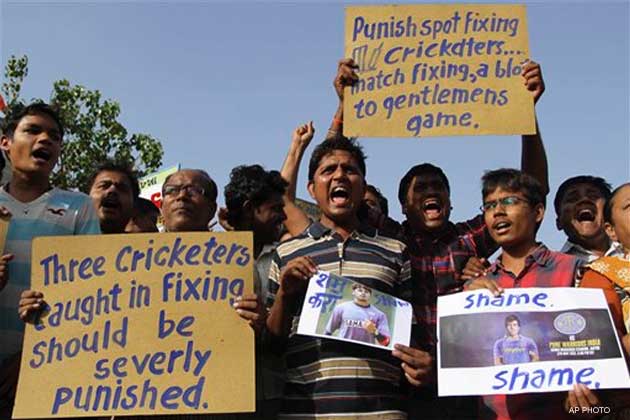


(Image Courtesy - CNN IBN)

Post IPL gate (that is what the 2010 scandals were collectively referred to in the media), few provisions have been made to prevent issues like match fixing, money laundering and betting. At best, franchisees were asked to indicate their sources of funding. Knowing well that there is no mechanism to validate the information provided, it makes no sense to disclose this information. Complaints on team funding were taken up by the governing body only after court cases were filed and not suo motu.

Players are allowed to use their discretion outside of the game and one practically has no guidelines on how to conduct their lives off the field. The minute a player starts playing in a major league/ match, he leaves no stone unturned to get himself to endorse any brand that can pay him. I would assume sportspersons would like to endorse brands associated with sports like playing gear, cosmetics, shoes, permitted food supplements, apparel etc. But No. A couple of years ago four leading cricketers including the Indian’s team’s captain endorsed an alcohol brand. Is there any association between sports and alcohol? Ceiling fans, chocolates, cameras, pens, cars, fairness creams, men’s fashion, are all endorsed by sportsmen.

This brings me to a fundamental question – Do players today play for money or the love of the game? Looking at former tainted players like Ajay Jadeja and Mohammed Azharuddin, one cannot help but notice that their lifestyles today are reflective of the riches garnered during their playing days. Little wonder then that players want to grab endorsements because the money earned lets them tide through poor performance and/or scandals. They can perhaps use this money to buy a place in the team to sustain the pipeline of endorsement deals so that they have enough money to last a lifetime.

The very fact that none of this has been discussed so far is an indication that cricket’s governing body wields no real control on ethics and principles. This needs to be fixed so the game restores the dignity with which it started out in India. I feel the following measures can help.

1) Curbing the value of endorsements – Players as well as those associated with the game in any capacity (umpiring, commentary, administration etc) need to have their endorsements curbed to not exceed 20 percent of the salaries they earn from the Board. This measure would be effective in preventing gold diggers to seek places on the team. Consider this – Players over the age of 22 earn a minimum of USD 50,000 (around Rs 25 Lakh) per IPL season. Winning teams earn as much as Rs 7.5 Crore on an average and players in these teams get a minimum of Rs 15 Lakh. Add to this perks from sponsors like cars, lifetime membership/ supply of certain goods, gold etc, in recognition of performance. Most cricketers are employed by private and public sector enterprises and earn a salary, no matter how insignificant compared to the lakhs made on the field. A salary of Rs 40-50 Lakhs a year for a few months of performance is adequate to live a reasonably luxurious life by Indian standards, what with most players stretching their playing years to ten. (Marketers define luxury as having a family income upwards of Rs 20 Lakh a year).

2) Guidelines for conducting oneself off the field during a season – A night of post match partying and debauchery is a distraction from the game. It takes double the effort from the support staff to prep a player post such sessions. Little wonder then that leading sports clubs in countries like UK (football clubs Manchester United and Manchester City) and US have strict guidelines of what players can and cannot do during a game season. The list of banned activities includes partying, drugs, one night stands, wives and girlfriends, car racing/ speeding, meeting/ talking to persons not approved by the management, cell phones, and, food from unauthorized eateries, among others. Anyone caught indulging in such activity is usually not allowed to play and can be banned from the team. This is helpful for younger players who often grapple with new found fame and attention.

3) Compulsory listing for franchisees – IPL franchisees should be listed on Indian stock exchanges and 50 per cent of share holding must be with retail investors. This will accomplish two things: force franchisees to declare their funding and toe the guidelines set forth by various legislations and be governed by SEBI; create a sense of loyalty / community ownership among the public who move from being mere viewers to part owners of the franchisee. Football clubs in the UK follow this model where franchisees are usually homegrown and hence enjoy loyalty from the communities. Considering IPL does not endorse that model, there is less loyalty between franchisees and the crowd. What complicates matters is that in many cases neither players not franchisee owners belong to the cities where these franchisees are based.

Cricket in India has long been a club of sorts run by patrons. The BCCI follows this archaic model where members are often heirs of the erstwhile patrons or political appointees, aspiring for control. But today the game has outgrown itself and taking strong measures can help run it professionally with dignity.

Tuesday, October 30, 2012

In defence of Siddhartha Mallya


I read an interesting piece in the Economic Times yesterday figuring out if Siddhartha Mallya was just a lucky inheritor or whether he really had what it took to run a business. The sole reason for this quest seems to be Mallya Jr.’s activity on social media. Many people including yours truly have shuddered reading his tweets about playing volleyball with bikini clad models on the sets of the Kingfisher Calendar shoot, when around 4,000 employees of Kingfisher Airlines haven’t got their salaries for the last seven months.


(Image courtesy: http://reviews.in.88db.com/)


What surprises me however, is that people who do not pay their domestic help on time and engage on social media pursuits for at least 3 hours in a working day have problems with Mallya Jr.’s behavior. (I know this is not entirely an accurate correlation. Mallya Jr. has little or nothing to do with the airline, except that it was launched on his birthday seven years ago.) Would it help if one did not know how he was spending his time? Would it help if he just became incommunicado like his father?
A decade ago, when social media use was not as compulsively used as it is now, many crooks just vamoosed over night. That included infamous chit fund owners, fly by night operators who made their money duping clients based on false stock market promises, politicians who had jumped camp, couples who had eloped etc. It was a while before they resurfaced in a new avatar and most people believed these folks had changed for the better. And that time spent incommunicado was actually time spent repenting their deeds. How terribly wrong these assumptions turned out to be.

What Mallya Jr. is doing is living his life – like he always has. Somehow it was ok watching him go from fat to fab, coochie-cooing with former girlfriend Deepika Padukone at the IPL, or seeing him make a mean cocktail on Simi Garewal’s show India’s Most Desirable – even as the airline wasn’t at the pink of its health then. He seems to seek no greater publicity now than what he sought then. He tweeted as much about his observations on life as he does now. Women, nightlife, entertainment, politics and London continue to be a part of his social media life. I’d say the man has at least remained consistent and transparent about his doings!

It has been made amply clear that Kingfisher Airlines is faced with bankruptcy, not the Mallyas’ personal fortune or for that matter any of their other businesses. Technically, the Mallyas do not have an obligation to pay anyone in their present condition. Morally, they might. But since when did we start caring about morality among the rich and powerful?

Update: Apparently, Siddhartha has stopped tweeting his observations on life. Does that now make him a better businessman?

Dislaimer: I have never had any professional or personal interactions with Kingfisher Airlines or the Mallya family. I do not own any stock in any of the companies floated by the Mallya family. I am as much of a spectator on this issue as most readers would be.

Wednesday, June 27, 2012

London Olympics 2012 - Lessons in covering sports holistically

(Images courtesy -http://www.robladin.com/sports/2012/03/06/olympics-organisers-to-hit-fundraising-target.html/london-2012-olympics-logo and http://indiatoday.intoday.in/story/london-olympics-2012-indian-athletes/1/185102.html)

The London Olympics 2012 is a little over a month away. Yet various aspects relating to the games have been covered diligently over the last four years, ever since the announcement was made that London would host the 2012 Olympics.


Almost everything from who constitutes the managing committee, how they were appointed and what role they will play, how much of the taxpayer’s money will go towards the games, the role of corporates in the games, opening ceremony plans, update on local players preparing for the games, tourist and other infrastructure development around the games, marketing channels used for the games, bidding process, recruitment of volunteers and even the food at the Olympics venue has been covered more or less in an unbiased manner.

Compare that with the coverage of the Delhi commonwealth Games 2010. The first set of reports on the games appeared when we bagged the contract to host the games. After that there was a near six year lull before reports started appearing of how some of the construction work was behind schedule or how some of the structures coming up would damage the ecological balance of the locality. About four months before the games were to commence, news broke of a possible scam in procurements. That was followed up by reportage that was in some way related to this alleged scam – poor quality of housing for athletes, incomplete infrastructure for the games, disturbance to commuters in Delhi owing to frequent diversions and no permanent solutions to traffic snarls etc. Once the games started, the coverage focused mainly on athlete victories. Post the games the government appointed the V.K. Shunglu committee to look into the irregularities and the media reported news of the investigation report being submitted.

While this coverage is commendable, it missed out on several vital aspects. These include timely reportage on how the CWG committee was formed, the experience of the committee in handling games of this magnitude, information exchange on building any capabilities we did not have, the committee’s functioning, progress of the projects (not just glaring lapses that resulted in lag in completion), bidding process for various items and other decision making by the executive committee.

Had such information been periodically reported, it could have helped identify irregularities early on and embark on course correction. This could have also avoided the reputation loss to the country and the bipartisan stand the media was forced to take.

This is not the only case of narrow piece meal sports reporting. The IPL coverage under the Lalit Modi regime too chose to focus on obvious facts – victories, defeats and team strategies for upcoming games. When the scam broke out, the focus remained primarily on the then proposed Kochi team and Shashi Tharoor and Lalit Modi and his dubious modus operandi. No details other than the amounts of money recovered by the Income Tax department or the fact that NRI money was used to fund the teams were disclosed. If the same dubious sources and modus operandi had funded an industry such as banking, information technology or manufacturing, the reportage would have been far more comprehensive bordering on being investigative.

Why is it important to cover sports holistically?

Sports is increasingly seen as the only option for success for many talented youngsters from under developed states/ underprivileged families. Spurred by recent successes, the nation is serious about grooming talent beyond cricket and nurturing smaller, less popular sports such as badminton, tennis, archery, rifle shooting, hockey, football and wrestling. For many readers, keen to follow these sports, there is little reportage on how these games are run by the respective apex governing bodies, player selections, sources of funding for the sport, training, rankings (regional or international) and challenges faced by players.

A case in point is the recent reportage of the tussle between players and the All India Tennis Association (AITA) for sending teams to the London Olympics 2012. Keen followers of the game would know that this was yet another ego issue and this time the players triumphed. It is public knowledge that players and tennis associations have had a rocky relationship across many countries and for many decades. Tennis was banned from the Olympics for close to 50 years till 1988, when the ATP and the International Olympic Association reconciled by putting aside their differences.

Had such background information been shared (or perhaps known to tennis reporters), the current AITA tussle could have been comprehensively (and knowledgeably) reported, instead of reporting it as a “Crisis in Indian tennis.”

Media scrutiny into the above mentioned aspects will not only give readers a wealth of knowledge, but also go a long way in improving the functioning of these apex bodies, boost sources of funding, bring more knowledgeable persons on the board and have meaningful outcomes. In an era where good governance is stressed upon for good outcomes, it is necessary that the media reports incisively and holistically on sports.

(I wrote this piece for the Hoot. For more details, read it here)

Monday, May 3, 2010

The Insider Reports: IPL-Gate – How not to do follow up reporting

This piece was my response to the coverage swimming around me in the last 1 month. I buy 3 newspapers and read at least 5 more online. I was aghast at how most of them were covering the IPL scam, giving little consideration to the ethics of journalism.


I am grateful to the Hoot for finding this worthy of publishing. The link to the piece is as follows:


For those who cannot open it for whatever reason, please find the piece below:

IPL-Gate --how not to do follow up reporting
 
Questions are not asked, news angles ignored. There has been a media witch hunt rather than responsible follow up reporting, says ARCHANA VENKAT
 
Posted Tuesday, Apr 27 22:38:16, 2010
 
The last few weeks have seen a witch hunt by the media to dissect any and every aspect of the Indian Premier League (IPL). So much so that even after the core issue of the IPL has been unearthed and is under investigation ' source of funding for the proposed Kochi IPL team and subsequently all other teams—journalists continue the trial by media by reporting bits and pieces of information that have no real relevance to the core issue.

In what can perhaps be termed as the worst possible example of "follow up" reporting, the media now runs the risk of being called irresponsible.

The primary aim of a follow up news report is to explore and answer questions raised in the first report. New information that broadens the perspective of the first report is secondary, unless it is of greater importance than the findings in the first report.  While following up on a story gives a journalist credibility and helps her/him and the reader/viewer get a holistic picture of the issue, it is important to pick, pursue and publish leads that may strengthen or weaken the case.

Unfortunately, with the IPL probe reportage, these principles seem to have been forgotten in the quest to break news.

A chartered flight between Delhi and Coimbatore, used by an IPL team, was in the news, allegedly because Poorna Patel, Aviation Minister Praful Patel's daughter and hospitality manager for the IPL, had used her father's clout to do so, leaving other passengers inconvenienced.  Air India CMD Arvind Jhadhav disagreed stating that the flight in question had taken all necessary permits, informed passengers much ahead of time and made arrangements for them with other flights. The aim of should have been to unearth if the IPL had flouted any norms. While that in itself may not have lent much support to the ongoing probe,

it certainly might have proved fodder to investigate who else's palms were greased by the IPL machinery. The journalist could have checked any previous instances of IPL teams having diverted flights for their use and unearthed a pattern for further investigation. A well investigated story with facts and figures could have had more impact than the current report that seemed like a cut-paste job of two opinions.

Another attempt to catch the IPL flouting norms was made by asking how and why the Maharashtra State government could permit the IPL go on post the 10 p.m Supreme Court ruling. The report quotes the IPL CEO Sundar Rajan stating he had written to the "ministers concerned," however, a slew of ministers quoted later do not seem to have any such recollection. Ideally, the journalist could have gone back to Rajan asking for a copy of the letter or at least the Ministers to whom it was addressed. With this information, one can check with the appropriate government department on the status of such a permit. Had such information been added in the story, readers would have derived greater value.

While Shashi Tharoor and Sunanda Pushkar have been hounded as outcasts, no efforts were made by any media to seek opinion from either parties. Only Tehelka took the efforts to speak to Sunanda Pushkar and published an interview that might prove almost all reports about her as amounting to libel. Whatever happened to the Barkha Dutts and Karan Thapars of the newsroom?

A most amusing discussion on the future of the IPL was aired by a leading news channel with socialite-author Shobhaa De and populist fiction writer Chetan Bhagat as panelists. True to their professions, both suggested rather colorful scenarios to the IPL's future. Pray, was it so difficult for the channel to find a credible panel, considering the abundant supply of

"sports analysts" who share their opinion after every IPL match?

The most interesting of all reports was the one on how Lalit Modi grabbed government land in Rajasthan in 2007 (courtesy his closeness to then CM Vasundhara Raje) at "throwaway prices". While this may indicate that Modi was an astute business man, it fails to establish any meaningful relationship with his current predicament? A possible investigative angles to this story could have been whether any of the IPL teams stayed at these properties (a couple of heritage havelis converted into resorts) and if so, why? Were these properties the hospitality partners for IPL? Was there a fair process to decide that?

On several occasions one does not get suitable angles to a story. In such a case it is best to go online and read the kind of comments readers leave to similar news reports. Not only does it give a journalist an indication of public opinion, it also reveals what kind of stories the readers feel would be enriching.

The fact that Shashi Tharoor's Twitter following has not diminished or that most youth still think of Modi as an icon must indicate something to a journalist. It is worrying that all reports on the IPL have so far been prejudiced against both these people. The aim of any reporting is to attempt to present both sides of an issue as objectively as possible.

The IPL management is being accused of betting and match fixing ' a malpractice that sports journalists are familiar with, thanks to the match fixing scandal that ended careers of popular sportsmen barely a decade ago.  Few have aimed at revisiting past coverage and attempting to draw similarities with the current scenario.  Lastly, no one has attempted to ask any of the franchise owners on details of the IPL clauses and whether there are any clauses specific to corporate

governance and anti-money laundering. Such information would directly add value to the reporting on the probe itself.

Either we have short memories or we simply do not want to kick up sweat in producing meaningful follow up reports.

Tuesday, April 20, 2010

Earful! : IPL Gate - Key Lessons

The latest scam to beak in India after the Satyam case, the IPL Gate will perhaps supercede Satyam in volume. To make sure you dont become the next Modi (Oops.. does Raju sounds better?), read on:

1. What goes up comes down: If you are flying in your private jet and looking down haughtily upon the rest of the cattle class travelers, beware. Your ex-co-passenger, now disgruntled at the thought of traveling cattle class, may inform the cops that you use ethanol instead of air fuel. What is more you don’t use power from the grid for your bathroom….

2.Technology killeth the human: Don’t indulge in key board lashing and virtual war. Be a man and fight your battles face to face. That way you can still tell people the rabid dog got you on the street last night, as you walk away wincing in pain holding the bandage around your jaw.

3.You Got e’m? Keep them: Bling is the new Sting! It is time to get the pastels out and leave behind any sign of flash, including the fake gold jewelry. If people as much a notice you, it’s a problem. Better hunt for a dowdy wig and a second hand Maruti 800. By the way, look around and you will see that beaded string jewelry has made a come back.

4.Network is equal to Net worth: As a corollary of point number 3, avoid meeting anyone who looks remotely well fed or well dressed. I would have suggested hanging around with the spiritual go-getters, had it not been for the Nithyananda episode. Your best bet could be the vegetable vendor or the 90 year old grandfather next door (On second thoughts, he might leave you behind an inheritance, so drop him from the list). At all costs avoid anyone worth giving a second glance.

5.Blood is thicker than water: Precisely why no amount of acidic talk will do any good. This is when one regrets not appreciating the foresight of the National Family Planning Commission’s messages of two rose and one bud and some bawdy copy scrawled on the back side of lorries. Relatives are a nuisance. More so when you want to go low key. Start looking for the anti-dote to Fevicol.

Now, where to put the real monies you ask? Buy gold out of the money and then bury it deep in your garden and let the dog poop on it. Or you could go the ancient way – build walls of gold and cover them up with high grade plaster (clue Amer Fort, Rajasthan).