Showing posts with label bias. Show all posts

Sunday, August 26, 2012

Fat chance of success


If I go under the scalpel, I will get employed/ promoted. That is what many would be prompted to think when they read the latest piece of health news that appeared last week. Relating cosmetic and other physique improving surgery to better employment prospects looks more like a gimmick to attract readers than to responsibly report a trend.


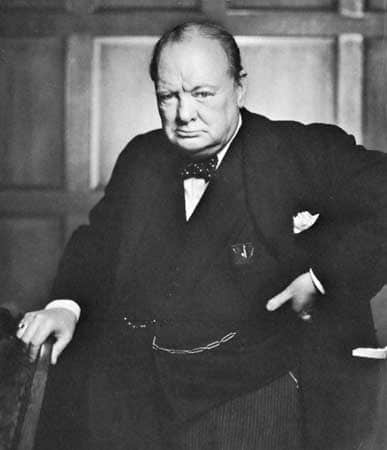
(Image Courtesy: http://content.artofmanliness.com/uploads/2009/07/churchill.jpg)


Health , a supplement of The Week magazine, carried a cover story on surgical makeovers and how they had boosted the careers of every person they interviewed. The piece interviewed professionals of all types – pilot, airhostess, lawyer, software engineer, businesswoman, and salesman - to capture the trend of people opting for all varieties of surgeries, even if they were not part of glamour driven industries. Some of the treatments mentioned include physique contouring, cosmetic surgery to alter facial features, breast and arms reduction surgery, gynaecomastia, high definition body sculpting for six-pack abs, rhinoplasty, liposuction, smile makeover, and teeth bleaching.

All those interviewed said the surgery boosted their careers. Really? How do we know for sure that the only reason they got a job or did better was solely because of their new look? What about other skills that are part of one’s job such as technical skills, good communication and general performance at work? None of this was discussed in the piece.

A plastic surgeon at a popular Delhi-based hospital was quoted saying that 60 percent of his patients underwent surgical procedures to improve their job prospects. To balance this opinion, the piece quoted just one cosmetic surgeon as saying there was no correlation between surgery and better job prospects. He added that surgery of any kind was risky and unless a medical condition warranted, one should stay away from such procedures. There was no information provided on what exactly happens as part of these surgeries, side effects and whether the results are permanent over a person’s lifetime.

What are readers more likely to believe? Reams of anecdotal evidence supplied by the people interviewed or two conflicting perspectives offered by specialists?

The media often highlights that only around 40 percent of our graduates and 25 percent of our post graduates are employable. Will they all get jobs, if they just look good?

The second piece published by the magazine in the same issue is more direct in its intention - to cause fear, anxiety, and depression among those seeking jobs or raises or promotions. Titled ‘Thin chance for the fat’, it briefly chronicles the experiences of four individuals who claimed to have lost jobs because they were obese. The piece quotes the CEO of a head hunting firm as saying “If you are obese, chances of getting a job of your choice is almost 100 per cent gone now as most companies don't recruit you instantly. Further, even if you are employed, in 50-60 per cent cases, the appraisals thereafter are not as good as the regular weight candidates'.” No clear evidence of such a case is presented in the entire story. This recruiter does not say if his clients specifically ask him to provide candidates who are not obese. Also no corporate view has been sought on this issue. The supporting research quoted by this piece does not have any figures pertaining to India.

While being obese is certainly not healthy, no where does the story attempt to realistically state what obese individuals cannot do that people of normal weight can. For example, are obese individuals slower in completing certain tasks? Or can normal weight people multi-task faster? What about those who are genetically predisposed to being large or are big boned? Many doctors agree that calculating the body mass index (BMI), a commonly used method to determine if one is obese, is not the most accurate method to determine fitness and health. How then can we determine one’s health?

Is this reflective of the employers’ bias towards those who are generally better looking, glib talkers and better networked? Indian society has been prejudiced and has discriminated against people based on their looks, caste, regional affinity and everything else apart from factors that really matter - talent, knowledge and ability to perform on the job. Thanks to such news, one can now rationalize discrimination and have employers justifying that they hired the average weight person because such a person would put less strain on the employee health insurance scheme, take up less space in the office elevator and eat less food at the cafeteria. After all these are business costs and a company has a right to limit its costs.

Strangely no piece talks about how corporates are largely to blame for the sedentary life style and lack of work-life balance that results in health issues. Most don’t encourage employees to take vacations or go home on time. Instead, the story highlights aspects like rise in corporate memberships at gyms for employees to get healthy. Is that the only way to lose weight? What about alternative forms of exercise such as yoga, jogging or free running? There is no mention of diet and nutrition either.

Other types of discrimination is also possible, if one were to read news reports of the rising number of eye lid surgeries performed in the North East so patients can look as “Aryan” as the rest of Indians. The story says children as young as 15 years are undergoing such surgeries to have a chance at a “normal college life” so they will not be addressed by derogatory terms like “chinki.” Nowhere does it talk about the dangers of such surgery or whether such an operation was sufficient to mask one’s identity. Those from the North East are recognizable also by their slim physiques, good fashion sense, polite manners and impeccable English. Will these not give- away their identities?

This issue is explored in an article by The Times of India where doctors urge patients to undergo counseling as part of planning for a cosmetic surgery procedure. The article quotes a plastic surgeon saying “People who want plastic surgery often blame their features for functional inadequacies, like a salesman claiming that his crooked nose affects his performance at work.” Such articles presenting the other side of surgeries, however, are far and few in the Indian media.

Trend reporting is much more than just talking about success stories. Reporters should strive to look deeper into the issues they are covering to see the bigger story. In my opinion, the bigger story here is not of the search for perfection by individuals but of the very real possibilities of using this perfection a tool to discriminate. Those without the means (or inclination) to afford such surgeries will stand to lose in this unfair battle. And the media would have a hand in promoting such a surgery driven lifestyle.

(I wrote this piece originally for The Hoot. You can read it here)

Wednesday, August 24, 2011

The Insider Reports: For Anna or against him? Do I have a choice?

Should the media always take a stand on every issue? At the end of my first journalism class one message was drilled into my head - "Journalists report. They do not give opinion." While I have considered this sacrosanct and tried to support views with facts for every story I have written, most of the media fraternity today seems to think it is their birth right to voice their views.
Media reporting of the Anna Hazare campaign is testimony to that. My piece in the Hoot attempts to highlight this new trend. The piece can be read at http://www.thehoot.org/web/home/story.php?storyid=5458&mod=1&pg=1&sectionId=1&valid=true.

Those who are unable to read it, please find the complete version below:
The Indian English media (mainly TV), perhaps influenced by the American media, seems to want to take sides on every issue worthy of public consumption. Covering the Anna Hazare campaign has been no different. Every prominent English news channel has resorted to taking sides on the issue to such an extent that journalists are falling short of putting words in the mouths of the guests they interview. The frenzy on news shows could rival the emotions on display at the Ram Lila grounds.
A glance at the reportage of the last 10 days indicates that most news organisations felt compelled to take a stand on the issue, perhaps without adequate thought over whether this was sustainable.
CNN IBN's Karan Thapar in his last interview with Digvijaya Singh on the JanLokPal Bill in April, conducted a fact based interview that was surprisingly devoid of any frenzy. Perhaps Mr. Thapar for once did not want to take sides? Or was he going gentle on Singh because he, like Singh, believed that the Anti-Corruption movement would not reach the proportions as it has today?
Then Thapar hosted a show on Aug 19th to analyze the media reporting of the Anna Hazare Campaign. Perhaps taking a cue from the discussion there, which indicated that the media had made Anna Hazare an icon without attempting to delve deeper into the issue that he was standing for, Thapar launched an Anti-Anna tirade in his show Devil's Advocate on August 21st. He attacked (which is now considered his style) Arvind Kejriwal and Prashant Bhushan with questions whose answers were available in the Indian constitution and in the beginnings of the Anna Hazare movement in December last year.
 To make up for the lack of thought-provoking questions, Thapar kept interrupting Kejriwal and Bhushan while they tried to respond to him. From taking a neutral (almost disinterested stand) in April to going anti-Anna now, I am not sure if taking sides was necessary.
NDTV's Barkha Dutt on her program We The People on Aug 21st attempted to re-establish that the Anna Hazare campaign was a largely middle class driven movement. How this piece of information would help or disrupt the protests is unknown. However, instead of spending one hour debating on the issue, taking a look at the way the campaign has progressed would have yielded results. The movement encompasses the middle class and grass root society (those taking to protests on road, fasting and galvanizing others) as well as the upper middle class and elite (showing support via social media such as Twitter, Blogs and Face Book). Strangely, in April this year Dutt aired a two hour special show where through a Vox Populi she established that the LokPal Bill would change the lives of middle class Indians.
Had the Jan LokPal Bill progressed beyond the stage of protests, say for enactment or dismissal, Dutt's stand on Aug 21st, in retrospect, would have been fruitful in determining how public sentiment (or social strata specific behavior and attitudes) can mobilise a cause. That in turn, could provide some insights into consumer behavior for entities (media houses, government, corporates etc) to improve their relationship with the consumers. An example of this is the Enron scam in the United States that was extensively reported and garnered public sentiment for 'zero tolerance to fraud'. Post Enron, the US has seen good models of corporate governance emerge and increased conviction of cases involving white collar crime.
Times NOW took a clear pro-Anna stand with Arnab Goswami not taking kindly to any comments against the Anna Hazare campaign. His discussion with Abhishek Manu Singhvi basely accused the government of procrastination. Further on a debate titled 'Pro and Anti-Anna", when all panelists on the show agreed that perhaps galvanized by raw emotion people were failing to focus on the larger implication of what the Bill would achieve, Goswami accused them of being unable to empathise with middle class sentiments and hence the Anna Hazare campaign as since they were not from that strata of society. A news channel taking such an objection to individual (or perhaps collective) opinion is in bad taste.
Leading English language newspapers too have taken sides in the Anna Hazare campaign, albeit in a more dignified manner (perhaps the lack of a camera and a collar mike does make a difference).
On Anna's arrests, the New Indian Express said that democracy was defiled and covertly indicated that the government would have to pass the Jan LokPal Bill, in order to reverse the damage of reputation.
The Times of India was more restrained while the Hindu indicated that the UPA government was on its way out. The Statesman likened Anna Hazare's arrest to the government's cowardice and pronounced the Government's version of the LokPal Bill to be ineffective and one that would not deliver the results sought by the people.
Subsequent editorials have focused on the need for the government to get its act together and focus on dialogue with Team Anna.

What has this tangled mass of reportage resulted in? A friend recently told me his driver was wearing a 'support Anna' T-shirt. On being asked what he felt about the Jan LokPal Bill, the man answered, "That I don't know. But I know Anna is against corruption and so am I".
While the media reportage has largely focused on the Anna-Government stand-off and the manner of protests, it has not shown as much enthusiasm to peruse the nitty-gritty of the Bill itself. Aside from the points of discontent (such as the inclusion of the Prime Minister and the Judiciary), there has been little else highlighted.
Is this is the only Bill of its kind? What will be the real implications of this Bill from a law and order point of view? Would the scope of this Bill include NGOs, corporate and other entities? Will the enactment of this Bill negate the reasons for us to look at other existing legislation such as the Prevention of Corruption Act or the Prevention of Money Laundering Act? Aside from the Anna version and the Government version, could there be a third, more amenable and still as effective version of the Bill that can be enacted? Will India have the manpower to deal with cases brought to notice through such a Bill? What additional resources would we need to fulfill any gaps?
Such questions have largely gone un-debated. Perhaps a look at similar Ombudsmen provisions across the globe and their effectiveness would have helped develop a more holistic perspective. After all, many developed nations such as the Scandinavian countries, Australia, Singapore and Hong Kong have an Ombudsman with varying degrees of power. The effectiveness of such Ombudsmen is also well documented through annual reports at the respective websites.
The role of the media in a democratic nation is to make people more cognizant of issues, focus on facts and provide a variety of perspectives, irrespective of whether or not they agree with those perspectives. By focusing on only the means adopted for the protest, many senior commentators  such as Arundhati Roy seem to indicate that they have no opinion (and perhaps little knowledge) whatsoever on the contents of the Bill, leaving it for the likes of lawyers to comment upon.
It is the responsibility of news editors to pick and publish (or air) perspectives that are holistic and balanced. For every article that criticizes the way the protests are being conducted, there could be another that lauds that same. If someone supports one of the provisions of the bill, a report objecting to the same should also be voiced so that users are left to shape their opinions while being aware of both sides to an issue.